
TL;DR:
- Australian households are increasingly normalizing higher spending due to lifestyle creep, rising essential costs, and digital payment convenience. These small, incremental changes often go unnoticed but together reduce savings and financial resilience over time. Effective budgeting requires tracking expenses, auditing bills, and building deliberate review habits to prevent the hidden erosion of financial stability.
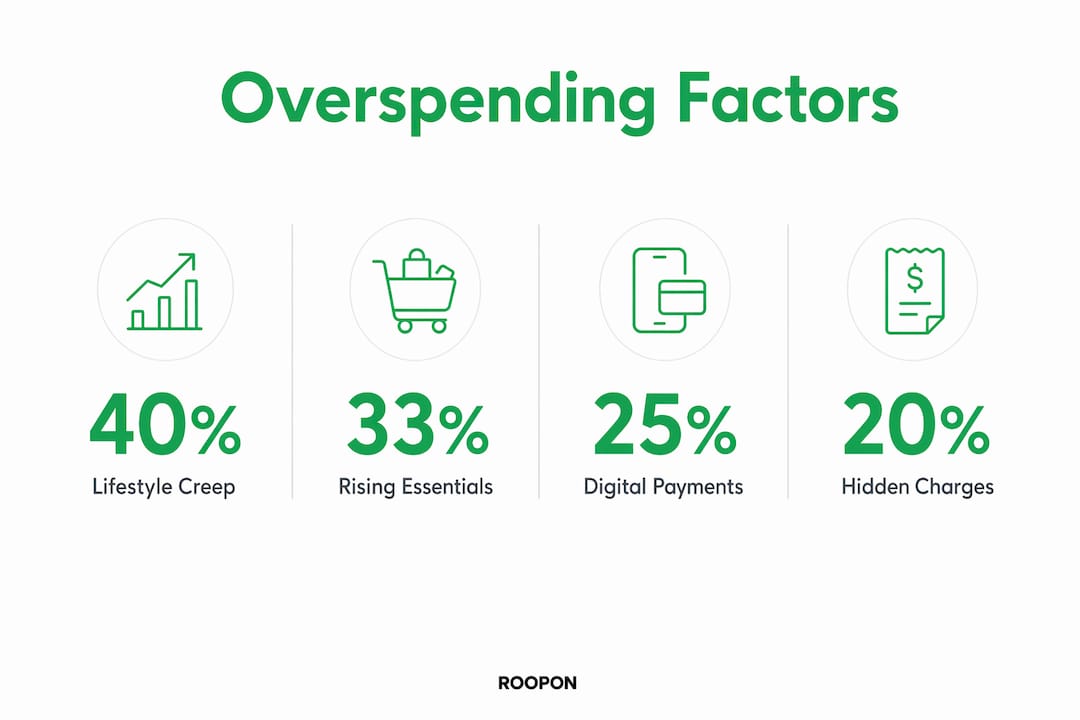
Overspending on everyday items in Australia is defined by the gradual normalisation of higher spending levels across both discretionary and essential categories, driven by lifestyle creep, rising essential costs, digital payment convenience, and overlooked billing details. The term "lifestyle creep" is the recognised behavioural economics term for this pattern. It describes how spending rises alongside income, quietly eroding savings even when households feel financially comfortable. Understanding why Australians overspend on everyday items requires looking at both psychological and structural forces. The cost of living in Australia has shifted dramatically, and the reasons behind daily expenses in Australia climbing higher are rarely as simple as poor discipline.
Why Australians overspend on everyday items: lifestyle creep explained
Lifestyle creep is the process by which a higher income or a life milestone, such as a promotion or a new home, triggers a permanent upgrade to your spending baseline. The problem is not the upgrade itself. It is that the new level of spending becomes the new normal, and savings goals quietly disappear.
Social media and marketing frame luxury purchases as earned rewards, which accelerates this process after any income rise. Researchers at Monash University and UTS have noted that identity signalling plays a strong role in Australian consumer behaviour. Spending on premium groceries, subscription services, or dining out becomes a way of expressing social status, not just satisfying a need.
The subtlety of lifestyle creep is what makes it dangerous. No single purchase feels excessive. A better coffee machine, a streaming service upgrade, a gym membership that replaced a free park run. Each decision seems reasonable in isolation, but together they raise your monthly baseline by hundreds of dollars.
- Discretionary spending rises in small increments after each pay rise or life event
- Subscription services accumulate without regular review
- Premium product choices replace budget alternatives across multiple categories
- Social comparison drives spending on visible lifestyle markers like dining and travel
- Emotional spending, used as a coping strategy for stress, adds unplanned costs
Pro Tip: Track your spending across categories for 30 days using a free tool like the Pocketbook app or your bank's transaction history. Look for categories where your average spend has risen more than 10% over the past year. That gap is likely lifestyle creep.
How rising essentials squeeze your everyday budget
Not all overspending is lifestyle-related. A significant portion of financial stress in Australian households comes from rising essential costs in housing, energy, and food, which compress the discretionary budget and force difficult trade-offs.
ABS data from 2026 shows that living costs rose between 2.6% and 5.2% year-on-year, with fuel prices jumping 32.8% and transport costs rising 5.1% in March 2026 alone. That kind of spike does not leave room for adjustment. Households absorb the cost first and recalibrate later, often by cutting savings rather than discretionary spending.
The psychological impact of unavoidable expenses increasing is underappreciated. When rent, power, and groceries cost more, people feel financially squeezed even if their income has not changed. That stress can actually trigger more emotional or comfort spending, which compounds the problem.
| Category | Trend in 2026 | Impact on household budget |
|---|---|---|
| Housing (rent/mortgage) | Rising sharply in major cities | Largest single budget pressure for most households |
| Energy bills | Increased due to wholesale price rises | Adds $200 to $500 annually for average households |
| Groceries | Persistent inflation across staples | Reduces discretionary spending capacity |
| Fuel and transport | Spiked 32.8% in March 2026 | Immediate and unavoidable cost increase |
| Discretionary spending | Squeezed by essentials pressure | Often cut last, after savings are already reduced |
Effective budget management in 2026 requires rebaselining when essentials costs shift, rather than purely cutting discretionary spending. That means recalculating your fixed costs first, then deciding what discretionary categories can flex. For a detailed breakdown of what has changed, the cost of living in Australia guide from Roopon covers the 2026 picture clearly.
Pro Tip: When an essential cost rises, update your budget immediately rather than waiting for the next pay cycle. Delaying the adjustment means you absorb the cost through reduced savings without realising it.
Do digital payments make Australians spend more?
Digital payment convenience is directly linked to higher overspending, and the moderating factor is digital financial literacy. A 2026 study published in Al-Kharaj found that perceived ease of digital payments increases overspending behaviour, while stronger financial literacy reduces it. This is a critical finding for Australian consumer behaviour, where contactless and mobile payments are now the dominant transaction method.
The behavioural economics explanation is straightforward. Cash creates friction. You see it leave your hand. Contactless payments remove that friction entirely, which means the psychological cost of spending feels lower even when the financial cost is identical. Contactless spending hides aggregate totals, making it easy to underestimate cumulative daily expenses in Australia across a week or month.
The solution is not to abandon digital payments. It is to build deliberate review habits that restore the awareness that cash once provided automatically.
- Set a weekly calendar reminder to review all transactions from the past seven days
- Use your bank's spending category breakdown to spot unusual increases
- Turn on real-time transaction notifications so each purchase registers consciously
- Set a daily or weekly spending limit alert through apps like CommBank, ANZ, or Up Bank
- Pause before any purchase over $50 and ask whether it was planned or impulsive
Why spending can feel stable while your budget quietly shifts
Australian households can be overspending without recognising it, because the total amount spent stays roughly the same while the category breakdown shifts in ways that reduce financial resilience. CBA data from May 2026 shows that household spending grew 5.7%, with retail up 6.5% and eating out up 8.5% year-on-year. These figures suggest spending confidence, but they mask a reallocation away from savings and long-term financial goals.
The perception challenge is real. If your total monthly outgoings look similar to last year, it is easy to conclude that your spending habits in Australia are under control. But if more of that total is going to essentials and less to savings or debt repayment, the financial position has deteriorated even though the number looks the same.
| Spending category | Year-on-year change (to May 2026) | What it signals |
|---|---|---|
| Overall household spending | +5.7% | Broad spending growth despite cost pressures |
| Retail spending | +6.5% | Consumers still purchasing goods, possibly on credit |
| Eating out | +8.5% | Discretionary dining resilient, possibly at savings' expense |
| Savings rate | Declining in many households | Budget reallocation away from financial buffers |
Realistic budgeting requires tracking not just the total but the split between categories. Tools like the Roopon Payday Allocator, or free alternatives like ASIC's MoneySmart budget planner, help you see where money is actually going rather than where you assume it is going. For practical strategies, the cost of living hacks guide from Roopon covers 30 specific approaches Australians are using in 2026.
Key takeaways
Australians overspend on everyday items because lifestyle creep, rising essential costs, frictionless digital payments, and unnoticed charges each erode the budget in ways that feel invisible until the financial damage is already done.
| Point | Details |
|---|---|
| Lifestyle creep is the primary driver | Spending normalises at a higher level after income rises, quietly eliminating savings. |
| Essentials costs force budget reallocation | Rising housing, energy, and fuel costs squeeze discretionary budgets and reduce savings capacity. |
| Digital payments reduce spending awareness | Contactless transactions hide cumulative totals; weekly reviews restore financial visibility. |
| Hidden charges add up significantly | Auditing bills and switching energy plans can save $150 to $400 or more per year. |
| Category shifts mask real overspending | Total spend may look stable while savings quietly decline due to category reallocation. |
The Roopon team's take on overspending in Australian households
From what we observe across Australian households, the most underestimated factor in overspending is not a single bad decision. It is the accumulation of small, reasonable-seeming choices that collectively shift the financial baseline upward. Lifestyle creep does not announce itself. It arrives as a slightly better bottle of wine, a second streaming service, a taxi instead of the bus. None of it feels like overspending in the moment.
What we find genuinely useful is the distinction between lifestyle-driven overspending and essentials-driven budget pressure. These require different responses. Lifestyle creep calls for deliberate spending reviews and category-level awareness. Rising essentials costs call for rebaselining your budget and proactively managing fixed costs through plan switching and negotiation.
The digital payments piece is one that most Australians underestimate. Spending with a tap genuinely does change how much you spend, not because you are careless, but because the psychological feedback loop that cash provides is simply absent. Building a weekly review habit is one of the most practical things you can do to close that gap.
The households that manage this well are not necessarily earning more. They are reviewing more. They know where their money goes, they audit their bills, and they treat their budget as a living document rather than a set-and-forget arrangement. That discipline is available to anyone, regardless of income level.
— Roopon Team
How Roopon helps Australians stretch their everyday budget
Everyday overspending is easier to manage when you have access to genuine discounts on the purchases you are already making.

Roopon offers exclusive "mates rates" across more than 16 partner stores, giving members real savings on everyday purchases without requiring behaviour change. Whether you are a student managing tight finances, a teacher stretching a modest salary, or a senior making a pension go further, Roopon has category-specific discount programmes designed for your situation. Explore student discounts in Australia, teacher savings, or senior discount access to see what is available. Members also gain access to the Payday Allocator tool, which helps you budget each pay cycle before lifestyle creep has a chance to take hold.
FAQ
What is lifestyle creep and why does it affect Australians?
Lifestyle creep is the normalisation of higher spending as income or life circumstances improve, causing the spending baseline to rise permanently. It affects Australians because income milestones and social media consistently frame upgraded spending as a deserved reward.
How much have living costs risen in Australia in 2026?
ABS data shows Australian living costs rose 2.6% to 5.2% year-on-year, with fuel prices spiking 32.8% and transport costs rising 5.1% in March 2026.
Do contactless payments cause Australians to spend more?
Research confirms that digital payment ease increases overspending, because frictionless transactions reduce the psychological awareness of cumulative spending. Building a weekly transaction review habit directly counteracts this effect.
How can Australians reduce unnoticed charges on their bills?
Auditing recurring charges every six months and comparing energy plans on the Australian Energy Regulator's Energy Made Easy tool are the most direct steps. Switching plans proactively can save between $150 and $400 annually.
Why does household spending look stable even when overspending is occurring?
CBA data shows overall spending grew 5.7% to May 2026, but the growth is concentrated in retail and dining out rather than savings, meaning the total figure masks a deteriorating financial position.
