

TL;DR:
- Giveaway terms and conditions define entry rules, prize details, and responsibilities, ensuring validity.
- Reading these rules prevents disqualification, missed prizes, and unexpected tax liabilities.
Giveaway terms and conditions are the official rules that define who can enter a promotion, how winners are selected, and what responsibilities both sponsors and entrants carry. Knowing how to understand giveaway terms and conditions is the difference between a FREE valid entry and an automatic disqualification. These documents cover eligibility, prize details, entry limits, and claim windows. Platforms like Roopon publish clear terms for every draw they run, which makes it easier for entrants to know exactly where they stand before submitting a FREE entry.
What are the key components of giveaway terms and conditions?
Sweepstakes require disclosure of eligibility, entry methods, prize details, and the selection process to ensure transparency and legal compliance. Every legitimate giveaway will include these sections, and skipping any one of them is where most entrants come unstuck.
Eligibility criteria tell you who is allowed to enter. This typically covers:
- Minimum age (usually 18 in Australia)
- Country or state of residence
- Exclusions for employees of the sponsor and their immediate family members
- Any membership or subscription requirements
Entry methods explain how you submit a valid entry. Many giveaways offer multiple ways to enter, including social media follows, form submissions, or referrals. Sponsors must also provide an Alternate Method of Entry (AMOE), which is a free way to enter without making a purchase.
Prize details are where you need to read carefully. The terms will list the prize description, the Approximate Retail Value (ARV), and who is responsible for taxes. ARV may be inflated, which affects a winner's tax bracket and out-of-pocket payments. That means a prize listed at $5,000 ARV could cost you more in tax than the prize is actually worth on the open market.

Notification and claim windows are strictly enforced. Claim windows often range from 48 hours to 7 days and missing that window means automatic forfeiture of the prize. Set a calendar reminder the moment you enter a draw.
Limitations include maximum FREE entries per person, per household, or per IP address, plus conditions that lead to disqualification such as using bots or providing false information.
Pro Tip: Print or screenshot the terms before you enter. If a dispute arises later, you will have a record of the rules as they appeared at the time of your entry.
How do giveaway terms affect your chances and what pitfalls should you watch for?
Misunderstanding entry limits is the most common cause of perceived fraud among entrants. Most people who feel they were cheated out of a prize were actually disqualified for a rule they did not read. Here are the most frequent pitfalls, in order of how often they occur:
- Ignoring entry limits per household or IP address. Submitting multiple FREE entries from the same device or address when the rules prohibit it results in all FREE entries being voided.
- Missing the claim window. Winners who do not respond within the specified timeframe automatically forfeit their prize. Failing to respond within the claim window results in prize forfeiture, full stop.
- Misreading the ARV. The prize may be listed at a high ARV for tax reporting purposes, but the actual street value is lower. You still pay tax on the ARV figure, not the lower market price.
- Submitting incorrect personal details. If you win and your name, address, or contact details do not match what you submitted, the sponsor can disqualify you. In the United States, winners may need to complete an IRS Form W-9 before receiving their prize.
- Entering a scam disguised as a giveaway. Vague terms, missing sponsor information, and unclear notification processes are red flags for illegitimate promotions. If the terms do not name a sponsor, describe the prize clearly, or explain how winners are chosen, walk away.
⚠️ A useful rule of thumb: if a giveaway asks for payment to claim a prize, it is not a legitimate sweepstake. That is a scam.
Pro Tip: Check the Australian giveaway laws that apply to promotions run in this country. Australian consumer law has specific requirements that differ from U.S. sweepstakes rules.
Sweepstakes, contests, and lotteries: how do the terms differ?
Legal definitions distinguish sweepstakes, contests, and lotteries in ways that directly affect how terms and conditions are written and what entrants can expect.
| Type | How winners are chosen | Purchase required? | Legal status |
|---|---|---|---|
| Sweepstake | Random draw (chance) | No. Free entry must be available | Legal when AMOE is provided |
| Contest | Skill or merit (judged) | May vary by jurisdiction | Legal when judging criteria are clear |
| Lottery | Random draw (chance) | Yes (consideration required) | Illegal when run privately |
The critical distinction is the "no purchase necessary" rule. The 'No Purchase Necessary' doctrine requires free entry paths that offer identical odds for all entrants, preventing a giveaway from being ruled an illegal lottery. If a sponsor charges for entry and uses a random draw, that is an illegal lottery under Australian and U.S. law.
Contests are different again. A photography competition judged on creative merit is a contest, not a sweepstake. The terms will specify judging criteria, who the judges are, and how scores are calculated. Read those criteria carefully because submitting work that does not meet the brief disqualifies your entry regardless of its quality.
Understanding which type of promotion you are entering tells you immediately what the terms should contain. If a sweepstake's terms do not mention a free entry method, that is a legal problem for the sponsor and a warning sign for you.
How to read and interpret giveaway terms effectively
Reading official rules thoroughly takes about two minutes but eliminates the majority of entrant mistakes and disqualification cases. Two minutes is a worthwhile investment when a prize is on the line.
Work through the terms in this order:
- Eligibility first. Confirm your age, location, and any exclusions before you spend time on the rest of the document.
- Entry methods. Identify every valid way to enter and note the maximum FREE entries allowed. Check whether FREE bonus entries are available through referrals or social shares.
- Prize section. Note the ARV, what is included, and what is not. Check whether cash prize tax obligations apply in your state or territory.
- Notification process. Find out how and when winners are contacted. Note the claim window and add it to your calendar immediately.
- Sponsor details. A legitimate giveaway names the sponsoring company, its address, and contact details. No sponsor name is a red flag.
- Privacy terms. Check whether your data will be shared with third parties. Some giveaways are data collection exercises dressed up as prize draws.
One concept worth knowing is Constructive Receipt. Constructive Receipt means you are responsible for taxes in the year the prize becomes available to you, even if you have not physically received it yet. That matters if a prize is awarded in december but delivered in february of the following year.
If you want to decline a prize to avoid tax obligations, act before signing any release documents. You must request a formal Waiver of Prize before signing releases that transfer ownership. Once you sign, the tax obligation is yours.
Roopon lists verified prize draws with clear terms, so you can check eligibility and entry conditions in one place rather than hunting through dense legal documents.
Key takeaways
Reading giveaway terms and conditions carefully takes two minutes and prevents the most common causes of disqualification, missed prizes, and unexpected tax bills.
| Point | Details |
|---|---|
| Check eligibility first | Confirm age, location, and exclusions before entering to avoid wasted effort. |
| Understand ARV and tax | ARV may be inflated above street value, which affects your actual tax liability if you win. |
| Note the claim window | Claim windows can be as short as 48 hours. Missing the deadline forfeits your prize automatically. |
| Verify the AMOE | A legitimate sweepstake must offer a free entry path with identical odds to paid entry. |
| Spot red flags early | Missing sponsor details, vague prize descriptions, or no FREE entry method signal an illegitimate promotion. |
The two minutes most entrants skip
From watching how people engage with giveaways, the pattern is consistent. Entrants spend ten minutes filling out a form and zero minutes reading the rules. Then they are surprised when they are disqualified or miss a prize notification.
The tax section alone is worth reading every single time. A prize with a high ARV can push a winner into a higher tax bracket for that financial year, which means the prize costs money rather than delivering it. Knowing this in advance lets you make an informed decision about whether to enter at all. If you decide to decline, you need to request a Waiver of Prize before signing anything. Most people do not know that option exists.
Claim windows are the other silent prize killer. A 48-hour window sounds generous until you are travelling, unwell, or simply miss the notification email in your spam folder. The fix is simple: add a follow-up reminder to your calendar the moment you enter any draw with a significant prize.
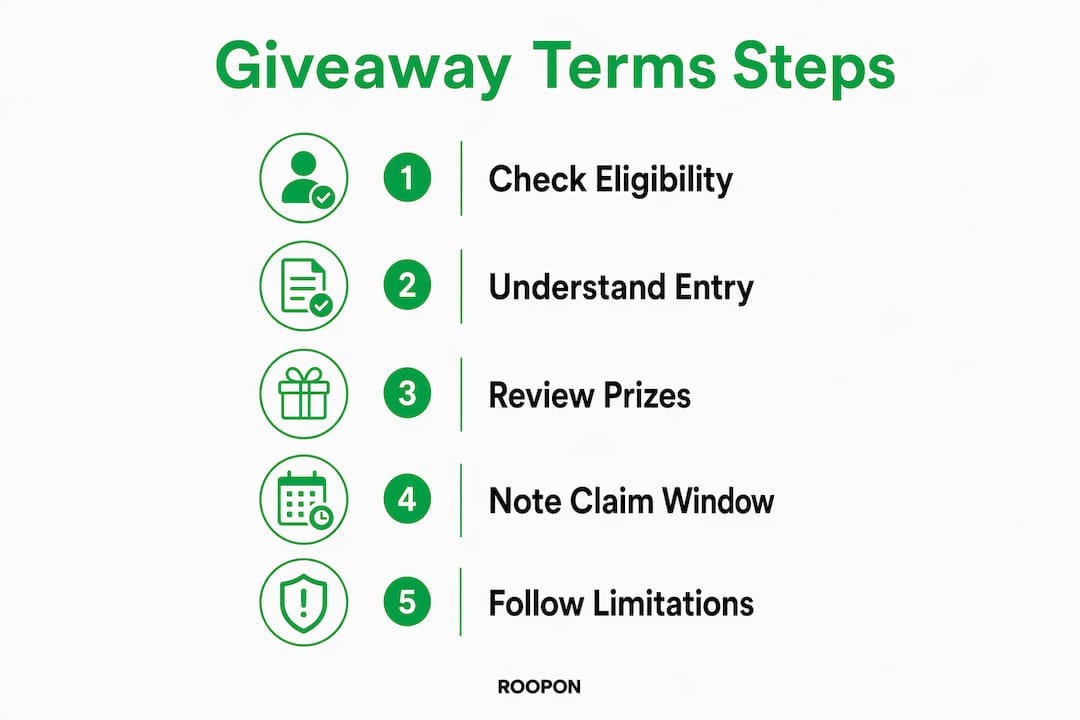
The best habit is to treat the terms as a two-minute checklist rather than a legal document. Eligibility, entry limits, prize value, claim window, sponsor name. Five checks. That is all it takes to enter with confidence and protect yourself from the most common pitfalls.
Roopon's prize draws: clear terms, real prizes
Roopon runs free prize draws in Australia with published terms that cover eligibility, entry methods, prize descriptions, and claim processes in plain language. Members receive FREE included prize-draw entries per your plan and published campaign terms. Extra packages exist for specific campaigns. Shopping and everyday purchases do not automatically earn FREE entries.

For Australians who want to enter draws without decoding complicated legal documents, Roopon's cash prize draws are structured to be transparent from the start. Whether you are a student, a tradie, or a healthcare worker, Roopon has membership options with exclusive savings for members alongside genuine prize opportunities. The terms are there, they are clear, and they are worth reading.
FAQ
What does "no purchase necessary" mean in a giveaway?
"No purchase necessary" means the sponsor must provide a free alternate entry method with identical odds to any paid entry path. This requirement keeps the promotion legal and prevents it from being classified as an illegal lottery.
How long do I have to claim a prize after winning?
Claim windows typically range from 48 hours to 7 days and are strictly enforced. Missing the deadline results in automatic prize forfeiture, regardless of the circumstances.
Do I pay tax on giveaway prizes in Australia?
Tax obligations on prizes in Australia depend on the prize type and whether it is considered income. Check the specific terms of each giveaway and review current Australian prize tax rules for your situation.
What is ARV and why does it matter?
ARV stands for Approximate Retail Value. ARV may be inflated above the actual street price of a prize, which can increase your tax liability if you win.
How do I know if a giveaway is legitimate?
Legitimate giveaways disclose sponsor details, prize descriptions, and winner selection processes clearly. If any of those elements are missing or vague, treat the promotion as suspicious.
