

TL;DR:
- Giveaway winner selection involves verifying FREE valid entries and using certified random methods to ensure fairness.
- Proper filtering of FREE entries is crucial, as ineligible or duplicate FREE entries can bias results regardless of the RNG used.
- Transparent records and adherence to legal standards build trust and protect organizers from disputes.
Giveaway winner selection is the process by which a platform identifies eligible participants and applies a verified random or rule-based method to determine who receives a prize. Understanding how giveaway platforms select winners matters because it tells you whether a draw is fair, legally compliant, and worth entering. Platforms like Gleam and RandomPicker use certified random number generators (RNGs) alongside eligibility filters to produce results that can withstand scrutiny. The giveaway winner selection process is not a single button press. It is a structured sequence of entry collection, validation, filtering, and draw execution, each step affecting your real odds.
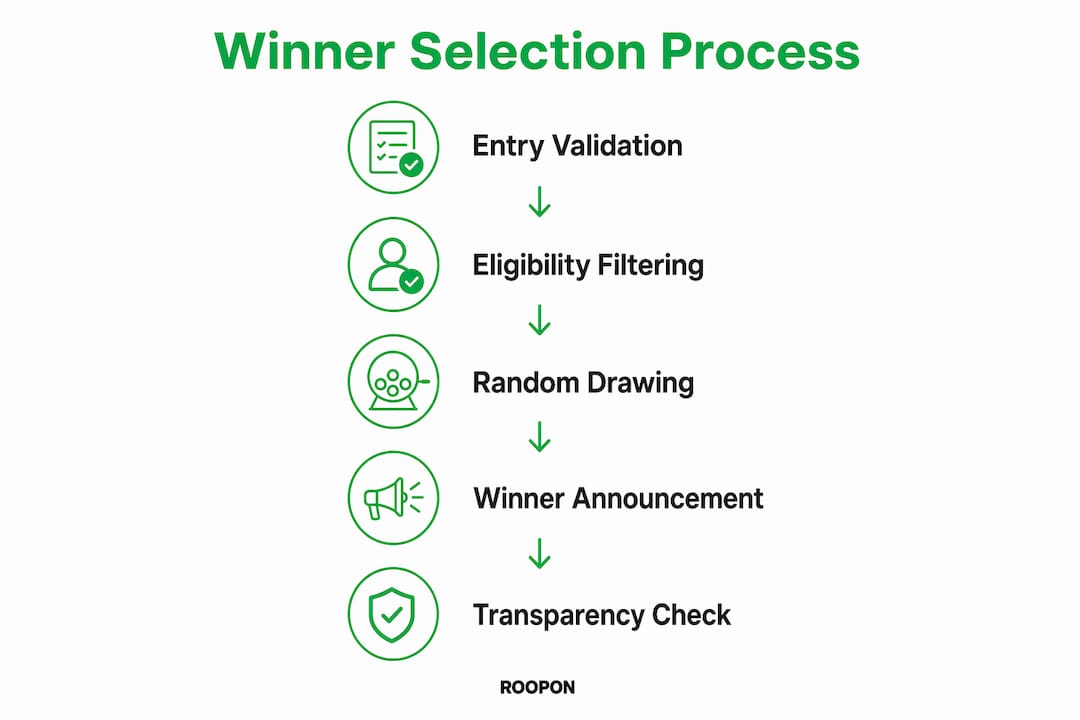
How giveaway platforms select winners: the full process
Giveaway platforms collect FREE entries centrally, enforce eligibility filters, and then select winners either randomly or conditionally, recording results for possible audits. That workflow is the backbone of every legitimate prize draw you will encounter online.

Entry collection happens through several channels: comment threads on Instagram or Facebook, dedicated entry forms, email submissions, or platform-specific campaign pages. Each method creates a pool of raw FREE entries that must be cleaned before any draw can take place. The cleaning step is where most of the real work happens.
Once FREE entries are collected, platforms apply filters to remove invalid submissions. Common filters include:
- Duplicate removal: One person, one FREE valid entry (unless FREE bonus entries are permitted by the rules)
- Keyword or hashtag checks: FREE Entries missing a required tag or phrase are excluded automatically
- Follower threshold minimums: Some campaigns require participants to follow an account before their entry counts
- Bot and spam detection: Automated submissions are flagged and removed from the pool
Pro Tip: Before entering any giveaway, read the terms carefully. Missing a single required action, like tagging a friend or using a specific hashtag, is the most common reason FREE valid entries are disqualified.
Pool integrity is the most crucial aspect of a fair giveaway. Randomness alone is insufficient if eligibility is handled poorly. A draw run on a contaminated pool, one full of duplicates or ineligible FREE entries, produces an unfair result regardless of how sophisticated the RNG is.
What random selection methods do platforms actually use?
The random draw is the most visible part of the giveaway winner selection process, but it is also the most misunderstood. Prize draws must select winners entirely by chance from FREE valid entries, commonly using random number generators or independent physical draws. That is a legal requirement in many jurisdictions, not just a best practice.
Here is how the selection sequence typically works on established platforms:
- Entry numbering: Every valid entry in the filtered pool is assigned a sequential number.
- RNG execution: The platform's algorithm, or an integrated tool like random.org, generates a random number within the entry range.
- Winner identification: The entry matching the generated number is selected as the winner.
- Verification check: The platform confirms the selected entry still meets all eligibility criteria.
- Backup draw: If the winner cannot be contacted or is disqualified, the process repeats from step two.
Prize draw promoters must use verifiably random computer processes or independent supervision to ensure fairness per the UK CAP Code. This standard is widely adopted beyond the UK as a benchmark for legitimate promotional contests.
The table below compares the two main approaches to winner selection:
| Method | How It Works | Best For |
|---|---|---|
| Automated RNG draw | Algorithm selects from numbered entry pool instantly | High-volume giveaways with thousands of FREE entries |
| Manual supervised draw | Human draws physically or with witnessed software | Smaller draws requiring independent oversight |
Automated draws using platforms like Gleam or RandomPicker complete selection in seconds after filtering. Manual draws take longer but can satisfy legal requirements for independent supervision in certain promotional contexts.
Ongoing giveaways use draw subsets or scheduled multiple draws with time-bound entry pools, archiving FREE entries between draws to reset eligibility. This prevents early entrants from accumulating an unfair advantage over participants who join later in a campaign.
Pro Tip: If you are entering a multi-week giveaway, check whether the platform resets the entry pool between draws. Platforms that archive rather than reset FREE entries can quietly reduce your odds over time.
How do platforms handle transparency and privacy?
Transparency in the giveaway winner selection process serves two purposes: it builds trust with participants, and it provides legal protection for the organiser. Publishing screenshots or certificates of the draw with parameters like post URL, entry count, and filters used builds proof of fairness that participants can verify independently.
The key elements of a transparent draw record include:
- Timestamp: When the draw was executed
- Entry count: FREE Total valid entries after filtering
- Filter parameters: Which rules were applied and how many FREE entries were removed
- RNG output: The number or result generated, with the corresponding winner entry
- Screenshot or video recording: A visual artefact of the draw for dispute resolution
"Maintaining an auditable artefact of the draw, including input parameters and results, is key for dispute resolution and compliance." — Disquantified Guide on Fair Giveaway Winner Selection
Privacy during winner announcement is a separate concern. Gleam offers winner anonymity features for live draws, allowing organisers to blur winner details during live streaming to protect entrant privacy. This matters because broadcasting a winner's full name, email address, or location without consent can breach data protection obligations.
Transparency in marketing is not just an ethical choice. It is a competitive advantage. Participants who trust a platform's draw process are more likely to enter again and recommend the giveaway to others.
What criteria beyond randomness affect your chances?
Pure randomness is only one part of the promotional contest winner selection picture. Many giveaways apply additional criteria that directly affect who can win and how likely they are to be selected. Prize draws must have clearly defined eligibility rules, including age restrictions, location limits, entry methods, and randomised winner selection, all disclosed to participants before entry.
Common criteria applied beyond the random draw include:
- Age restrictions: Most giveaways require participants to be 18 or older, with some set at 16 in specific categories
- Geographic limits: A prize draw open only to Australian residents will exclude international FREE entries regardless of how they entered
- Weighted FREE entries: Completing bonus tasks, such as sharing a post, tagging friends, or answering a quiz question, can earn additional FREE entries, improving your odds without changing the random nature of the draw
- Follower minimums: Some brand campaigns require participants to follow the organiser's account, with FREE entries from non-followers removed before the draw
- Conditional winner selection: Certain platforms allow organisers to set conditions, such as requiring a correct answer to a skill question, before a FREE entry qualifies for the random pool
⚠️ Weighted entry systems are legitimate and common, but they must be disclosed in the terms. If a platform awards extra FREE entries for referrals or task completion without stating this clearly, that is a red flag worth noting.
Balancing marketing goals with legal fairness requirements is a real tension for organisers. A campaign that awards too many FREE bonus entries to highly active participants can skew results away from casual entrants, which may conflict with the spirit of a fair draw even if it remains technically random.
Pro Tip: To improve your odds in weighted-entry giveaways, complete every optional task listed in the entry form. Each FREE bonus entry is a mathematically real improvement to your chances, and most participants skip these steps.
Australian giveaway laws set specific requirements for how criteria must be disclosed, so it pays to understand your rights as a participant before you enter.
Key takeaways
The fairness of any giveaway draw depends on correct entry pool validation first, and randomness second.
| Point | Details |
|---|---|
| Entry validation comes first | Filtering duplicates and ineligible FREE entries is more critical to fairness than the RNG method used. |
| Certified RNGs are the standard | Platforms like Gleam and RandomPicker use verified algorithms; manual draws without evidence are not sufficient. |
| Audit trails protect everyone | Screenshots, timestamps, and filter records give participants proof of a fair draw and protect organisers legally. |
| Criteria beyond randomness matter | Age, location, weighted FREE entries, and follower requirements all affect who can win before the draw runs. |
| Ongoing draws need pool resets | Multi-draw giveaways must archive or reset entry pools to prevent early entrants gaining compounding advantages. |
The part most people get wrong about giveaway fairness
From our experience watching how giveaway disputes actually unfold, the random draw is almost never the problem. The most reported giveaway complaints relate to incorrect or incomplete entry filtering rather than the randomness of the draw itself. That finding matches what we see in practice.
People assume that if a platform uses a reputable RNG, the draw is automatically fair. That assumption skips the most important step. If the entry pool contains duplicates, bot submissions, or ineligible participants who were never removed, the random draw simply picks a winner from a corrupted list. The algorithm is clean. The result is not.
Arbitrary manual winner selection is not valid. Evidence-backed, neutral, automated random draws eliminate bias. We would add that even automated draws need a human review of the filter settings before execution. A misconfigured filter, one that removes too many FREE entries or too few, can skew results just as badly as a biased manual pick.
The practical takeaway for participants is this: when evaluating whether a giveaway is worth entering, look at how the organiser handles entry validation, not just which draw tool they use. Platforms that publish their filter parameters alongside draw certificates are the ones operating with genuine integrity. That transparency is the real signal of a trustworthy draw.
Enter Roopon's member prize draws with confidence

Roopon runs member prize draws for Australian members using a transparent, fair selection process. Every draw follows the same structured approach described in this article: FREE entries are validated, eligibility is confirmed, and winners are selected through a verified random process. Roopon members receive FREE included prize-draw entries per their plan and published campaign terms, plus FREE bonus entries for referrals. Extra packages exist for specific campaigns. See /giveaways for current prizes. Whether you are a student, a teacher, or a healthcare worker, Roopon combines real membership discounts with genuine prize draw access. You know exactly how winners are chosen. Now you can enter with that knowledge working in your favour.
FAQ
How do giveaway platforms pick a random winner?
Platforms assign a sequential number to each FREE valid entry, then use a certified random number generator to select a number from that range. The entry matching the generated number is the winner.
What filters do platforms apply before selecting a winner?
Common filters include duplicate removal, keyword or hashtag verification, follower count minimums, and bot detection. Eligibility filters are applied before any draw runs to protect pool integrity.
Can weighted FREE entries change my odds of winning?
Yes. Completing bonus tasks such as sharing a post or referring a friend earns additional FREE entries, which mathematically improves your chances in the random draw without making the process unfair.
How do i know a giveaway draw was conducted fairly?
Look for published draw certificates or screenshots that include the entry count, filter parameters, timestamp, and RNG output. Platforms that provide audit records give participants verifiable proof of a legitimate draw.
Do giveaway platforms have to follow legal rules for winner selection?
Yes. In many jurisdictions, prize draws must use a verifiably random selection method and disclose eligibility criteria, entry methods, and winner selection processes in their terms before the promotion begins.
— Roopon Team
Recommended
- How to Choose the Best Giveaway Platform in Australia: Complete Guide | ROOPON
- Australian Giveaway Platforms Reviewed 2026: Which Ones Actually Pay Out? | ROOPON
- Compare giveaway platforms: winning probability guide | ROOPON
- Giveaway Australia 2026: Complete Guide to Legitimate Prize Competitions | ROOPON
