
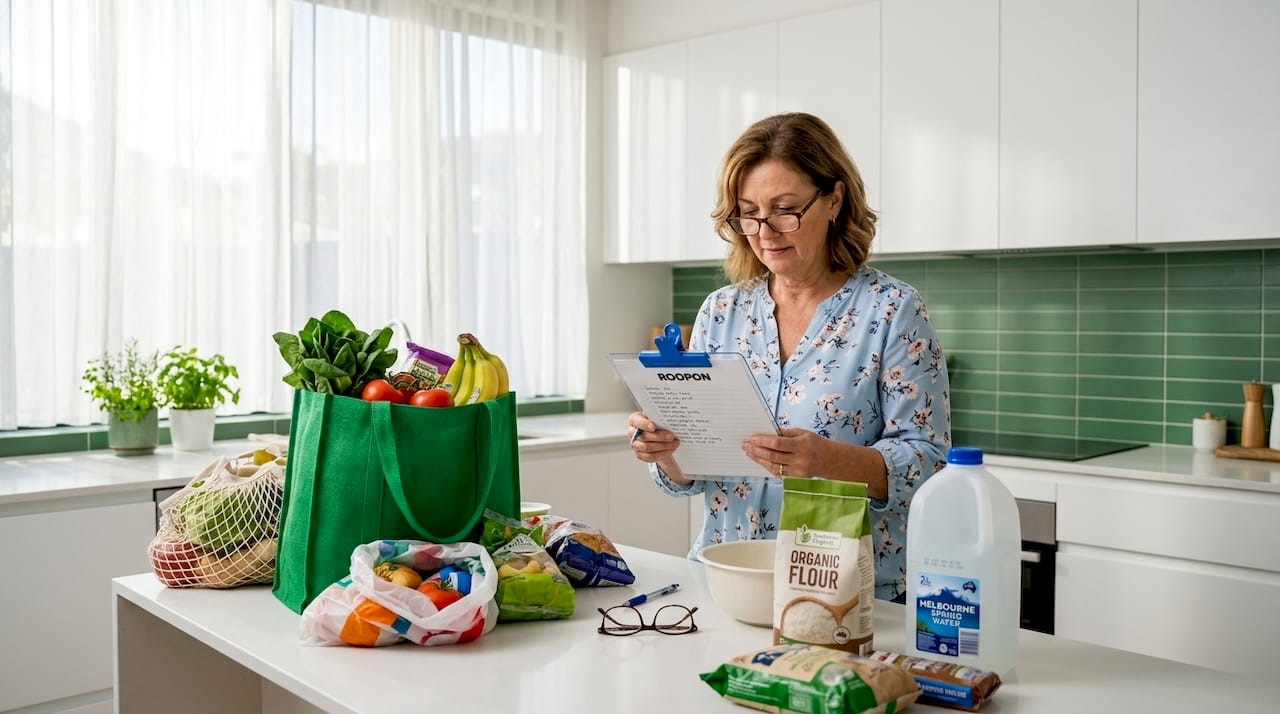
TL;DR:
- Saving money on everyday purchases in Australia is possible by combining supermarket price comparison, meal planning, and digital savings tools. Aldi offers the lowest grocery prices, and strategic sale timing, such as during EOFY discounts, can lead to significant savings on household items. Focusing on controllable expenses like consumables and using tools like Wisr Round Up helps Australians stretch their budgets effectively.
Saving money on everyday purchases in Australia is achievable right now, without drastic lifestyle changes. The most effective approach combines supermarket price comparison, meal planning, digital savings tools, and strategic sale timing. Australians facing rising living costs have more control than they realise. This article covers the latest 2026 supermarket pricing data, behavioural insights from consumer experts, and practical tools like Wisr Round Up and cashback programmes to help you cut daily expenses and stretch every dollar further.
What are the best supermarkets for cheap groceries in Australia?
Aldi is the cheapest supermarket for everyday groceries in Australia, with a basket of lunchbox essentials costing $75.98 compared to $90 or more at Woolworths, Coles, and IGA. That gap represents real money across a year of weekly shops. CHOICE conducted this comparison across 104 stores nationally in 2026, making it the most current and reliable benchmark available to Australian shoppers.
The picture shifts slightly when specials are included. Specials reduce the gap between Aldi and the major chains by $1 to $2.47 depending on the store, but Aldi still comes out ahead. This means loyalty to one supermarket based on habit rather than price is costing most households money every single week.
Unit pricing is the most underused tool in the supermarket. It lets you compare products by cost per 100g or per litre, cutting through the confusion of different pack sizes. Woolworths and Coles both display unit prices on shelf labels, and using them takes seconds once you get into the habit.
| Supermarket | Basket cost (no specials) | Basket cost (with specials) |
|---|---|---|
| Aldi | $75.98 | Lowest overall |
| Woolworths | $90+ | Moderate reduction |
| Coles | $90+ | Moderate reduction |
| IGA | Highest | Some reduction |
Pro Tip: Visit Woolworths or Coles mid-week, when new weekly specials go live, and cross-reference them against your Aldi baseline. You will often find it worthwhile to split your shop between two stores for the biggest savings.
How to plan and shop smartly to cut grocery bills
Making a shopping list and sticking to it is one of the most reliably effective ways to reduce grocery spending. Consumer behaviour experts confirm that impulse purchases, not price differences, are the primary driver of grocery budget blowouts. A list removes the decision-making that supermarkets are specifically designed to exploit.
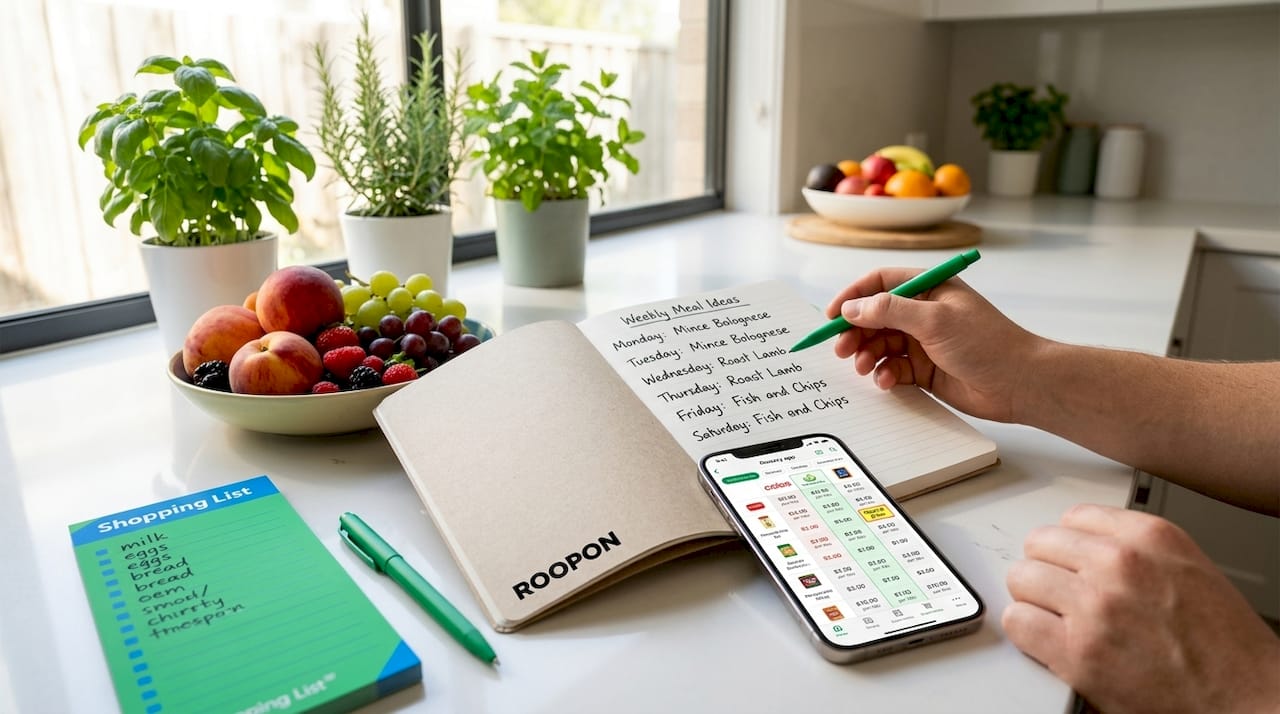
Shopping less frequently also reduces spending significantly. Supermarkets profit most from short, frequent visits because each trip creates new opportunities for unplanned purchases. Cutting from five visits per week to two is a practical and immediate way to reduce your grocery bill without changing what you buy.
Meal planning combined with price comparison and buying seasonal produce delivers compounding savings. When you know what you are cooking for the week, you buy only what you need, waste less food, and avoid the expensive fallback of takeaway on nights when there is nothing planned. RACV recommends checking advertised specials online before writing your list, so your meal plan bends toward what is already discounted.
Here are the core habits that make the biggest difference:
- Write your list from your pantry and fridge first. Use what you already have before buying more.
- Buy home-brand products for staples. Flour, rice, pasta, tinned tomatoes, and cleaning products are almost identical in quality to name brands at a fraction of the price.
- Buy seasonal produce. Strawberries in winter cost three times what they cost in summer. Seasonal eating is one of the most effective frugal shopping tips in Australia.
- Check catalogues before you shop. Both Woolworths and Coles publish weekly specials online. Aldi's Special Buys are published every Wednesday and Saturday.
- Avoid shopping when hungry. Research consistently shows that hunger increases basket size and the likelihood of buying discretionary items.
Pro Tip: When building your shopping list as a household, ask everyone to add their requests in one place, such as a shared notes app. This prevents duplicate purchases and gives you a realistic picture of what the household actually needs versus what individuals want.
What digital tools and cashback programmes help Australians save?
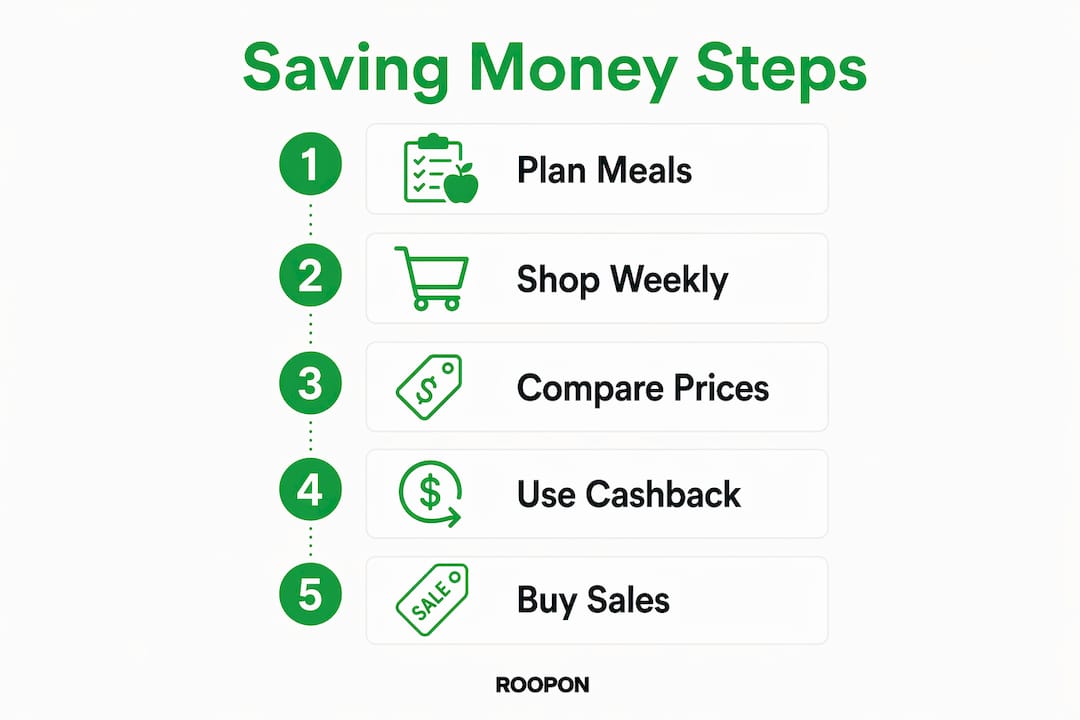
Wisr's Round Up feature rounds every transaction up to the nearest $1, $2, or $5 and redirects that small change toward savings or debt repayment automatically. The mechanic is simple: a $4.60 coffee becomes a $5.00 transaction, with $0.40 going straight to your nominated goal. Over a month of regular spending, this adds up without requiring any conscious effort. You can review the best savings apps available in Australia to find the right combination of tools for your situation.
Cashback programmes are another practical layer. These programmes return a percentage of your spending as cash when you shop through their platform or use their linked card. The best cashback apps in Australia vary in their partner networks and return rates, so it pays to compare before committing to one. Some focus on groceries and fuel, while others cover travel, insurance, and retail.
Here is a practical toolkit for digital savings:
- Wisr Round Up: Set your increment at $1 to start. Review after 30 days and adjust upward if you have not noticed the impact on your cash flow.
- Supermarket apps: Both the Woolworths and Coles apps offer personalised specials and digital catalogues. Woolworths Everyday Rewards and Coles Flybuys accumulate points that convert to discounts.
- Fuel price apps: GasBuddy and MotorMouth track real-time fuel prices by suburb. Checking before you fill up can save 10 to 20 cents per litre in areas with high price variation.
- Cashback browser extensions: These notify you of cashback opportunities automatically when you shop online, removing the need to remember to activate deals manually.
The key with digital tools is to start with one or two and actually use them, rather than signing up for six and abandoning all of them. Tracking your savings monthly, even in a simple spreadsheet, keeps the motivation real and concrete.
When and how to take advantage of sales on everyday goods
Waiting for EOFY sales delivers discounts on household appliances ranging from 20 to 80%, making it the single most effective timing strategy for larger purchases. CHOICE reports that average EOFY discounts sit between 20 and 50%, with occasional clearance lines reaching 80%. For budget-conscious Australians, this means delaying a washing machine or refrigerator purchase by a few weeks can save hundreds of dollars.
The same principle applies to other annual sale periods. Here is how to approach sale timing strategically:
- Identify what you need in advance. Make a list of appliances, clothing, and household items you expect to replace in the next six months. This prevents panic buying at full price when something breaks.
- Research the regular price before the sale. Retailers sometimes inflate pre-sale prices to make discounts look larger. Knowing the genuine retail price protects you from fake savings.
- Confirm you can substitute without quality loss. Before delaying a purchase, check that you can manage without the item or with a temporary substitute until the sale arrives.
- Check clearance and runout sales year-round. Retailers clear discontinued lines at significant discounts outside of major sale periods. Signing up to retailer email lists is the most reliable way to catch these.
- Combine sale timing with necessity. Buying something you do not need at 50% off is still spending money you did not need to spend. Sales work best when they align with genuine planned purchases.
Timing big purchases with EOFY consistently delivers more savings than chasing smaller scattered discounts throughout the year. One well-timed appliance purchase can outweigh months of coupon clipping.
How to manage everyday expenses beyond groceries
Categorising your expenses into fixed bills, maintenance costs, and consumables is the most practical framework for identifying where you can actually reduce spending. Fixed bills like rent and insurance are harder to adjust quickly. Consumables, which include groceries, fuel, and household supplies, are where daily decisions have the most immediate impact. Focusing your saving efforts on controllable categories prevents the frustration of trying to cut costs in areas where you have little flexibility.
Fuel is one of the most variable controllable costs for Australian households. Prices in the same suburb can differ by 15 to 20 cents per litre on the same day. Checking a fuel price app before filling up, and filling up on Tuesday or Wednesday when prices are typically lower in most Australian cities, is a straightforward way to reduce this cost without changing your driving habits.
- Use local markets for fresh produce. Farmers markets and independent greengrocers frequently offer better prices than supermarkets on fruit and vegetables, particularly for seasonal items.
- Buy consumables in bulk when on special. Toilet paper, laundry detergent, and non-perishable pantry staples are worth stocking up on when they hit a genuine low price.
- Review subscription services quarterly. Streaming services, gym memberships, and software subscriptions accumulate quietly. A quarterly audit often reveals two or three services you are paying for but not using.
- Batch cook and freeze meals. Cooking in larger quantities reduces both food waste and the temptation to buy expensive convenience food on busy nights.
| Expense category | Control level | Key saving strategy |
|---|---|---|
| Groceries | High | Meal planning, supermarket switching |
| Fuel | Medium | Price apps, mid-week fill-ups |
| Utilities | Medium | Usage audits, off-peak timing |
| Subscriptions | High | Quarterly review and cancellation |
| Household consumables | High | Bulk buying on specials |
Key takeaways
Combining supermarket price comparison, meal planning, digital savings tools, and strategic sale timing is the most effective way to reduce everyday living costs in Australia.
| Point | Details |
|---|---|
| Aldi is cheapest for groceries | A basket of lunchbox essentials costs $75.98 at Aldi versus $90+ at major chains. |
| Shopping lists reduce impulse spending | Writing and sticking to a list prevents the unplanned purchases that drive budget blowouts. |
| Digital tools automate savings | Wisr Round Up and cashback apps build savings passively without requiring daily effort. |
| EOFY sales deliver the biggest discounts | Appliance discounts of 20 to 80% make EOFY the best time to buy household goods. |
| Categorise expenses to find control | Focusing on consumables and fuel gives you the most immediate impact on daily costs. |
Our honest view on everyday saving in Australia
From where we sit at Roopon, the most common mistake we see is people trying to do everything at once. They download five apps, switch supermarkets, start meal planning, and attempt to track every dollar in the first week. By week three, most of it has fallen away because the cognitive load is too high.
The approach that actually sticks is different. Pick one habit, run it for a month, and let it become automatic before adding the next. Switching to Aldi for your main weekly shop is a good first move because the savings are immediate and require no ongoing effort once you know the store layout. After that, adding a shopping list habit costs nothing and takes five minutes. Then, when those two feel natural, layer in a digital tool like Wisr Round Up or a cashback app.
The psychological side of saving is underestimated. Seeing a concrete number, even a small one, builds momentum. Tracking your grocery spend for one month before making any changes gives you a baseline that makes every subsequent saving feel real and motivating. Without that baseline, it is hard to know whether your efforts are working.
We also think the quality-of-life concern is worth addressing directly. Frugal shopping in Australia does not mean eating badly or giving up things you enjoy. It means being deliberate. Buying the home-brand pasta and spending the difference on a good bottle of wine is a perfectly reasonable trade-off. The goal is control, not deprivation.
- Roopon Team
How Roopon helps you save on everyday purchases
Roopon is built for Australians who want their savings to go further than a supermarket swap. Members access exclusive 'mates rates' across more than 16 partner stores, covering everyday categories from groceries to household goods.

Beyond discounts, Roopon members receive FREE included prize-draw entries per your plan and published campaign terms. Extra packages exist for specific campaigns. The Payday Allocator tool helps members budget each pay cycle so savings happen before spending, not after. Whether you are a student saving on essentials, a teacher managing household costs, a pensioner stretching a fixed income, or a healthcare worker looking for better value, Roopon has a membership tier designed for your situation. Explore the full range of grocery saving tactics that Roopon members use to maximise their everyday budget.
FAQ
Which supermarket is cheapest for groceries in Australia?
Aldi is the cheapest supermarket for a standard grocery basket in Australia, with lunchbox essentials costing $75.98 compared to $90 or more at Woolworths, Coles, and IGA, according to CHOICE's 2026 comparison across 104 stores.
How much can EOFY sales save on household appliances?
EOFY sales typically deliver discounts of 20 to 50% on household appliances, with some clearance items reaching 80% off. CHOICE identifies EOFY as the single best timing strategy for large household purchases.
What is the easiest digital tool to start saving money in Australia?
Wisr Round Up is one of the simplest tools available, automatically rounding each transaction up to the nearest $1, $2, or $5 and directing the difference to savings or debt repayment without any manual effort required.
Does shopping less often actually reduce your grocery bill?
Shopping less frequently reduces spending because each supermarket visit creates new opportunities for unplanned purchases. Consumer experts confirm that supermarkets are designed to profit most from short, frequent visits.
How do I know which everyday expenses are worth targeting first?
The ADF Financial Services Consumer Centre recommends categorising expenses into fixed bills, maintenance, and consumables. Consumables like groceries and fuel offer the most immediate control and are the best starting point for reducing daily costs.
