

TL;DR:
- Sharing platforms incentivize loyal advocates because advocacy reduces costs, enhances trust, and drives sustainable growth.
- They focus on relationship-building rather than points, fostering genuine engagement and long-term community loyalty.
Sharing platforms reward loyal advocates because genuine advocacy drives trust, retention, and cost-efficient growth that no paid advertising campaign can replicate. The industry term for this dynamic is advocacy-based loyalty, and it sits at the heart of how modern membership platforms design their reward structures. Research from Deloitte, Ogilvy, and Salesforce all point to the same conclusion: platforms that treat loyal members as partners rather than transactions build more durable, profitable communities. For individuals and businesses trying to understand where the real value in loyalty programmes lies, the answer is not in the points. It is in the relationship.
Why sharing platforms reward loyal advocates: the core economics
The economic case for rewarding advocates is straightforward. Retention costs 17 to 25 times less than acquiring a new customer, according to the 2026 Customer Loyalty Engagement Index by Brand Keys and WISE Marketer. That single figure explains why platforms invest heavily in keeping existing members engaged and vocal rather than constantly chasing new sign-ups.
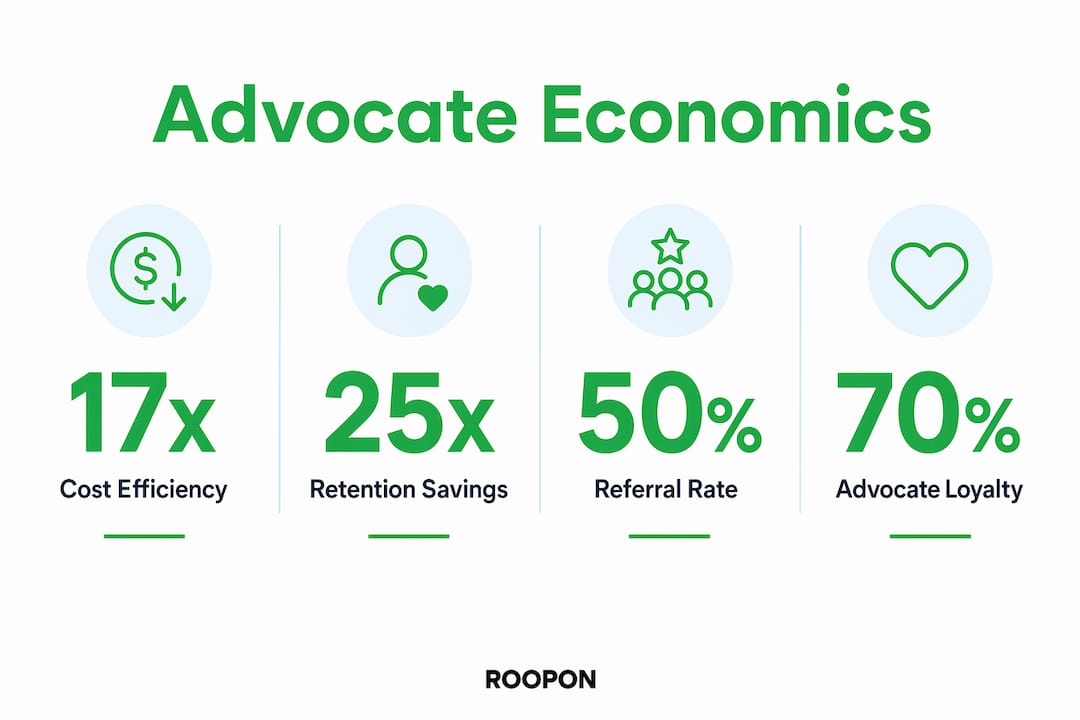
Loyal advocates deliver value on two fronts simultaneously. They stay longer, spend more consistently, and cost less to serve. They also bring in new members through trusted word-of-mouth, which converts at a higher rate than paid channels. Referral programmes that incentivise both the referrer and the new member leverage this dynamic directly, according to Salesforce's 2026 referral programme guide. The result is a self-reinforcing growth loop that compounds over time.
For users, the benefits of loyal advocates status go beyond discounts. Recognition, early access, and a sense of belonging to a valued community are rewards that points alone cannot replicate. Loyalty programmes that deepen engagement and reward ongoing activity shift the relationship from one-time promotions to a continual partnership, as the 2025 Deloitte Consumer Loyalty Program Survey of 5,564 US adults confirms.
- Reduced acquisition costs through organic referrals
- Higher lifetime value from retained, engaged members
- Amplified reach via trusted peer recommendations
- Stronger brand credibility through authentic user voices
Pro Tip: If you are evaluating a loyalty programme, ask whether it rewards you for your ongoing participation and referrals, not just your first purchase. That distinction separates a transactional scheme from a genuine advocacy partnership.
Why do traditional points programmes fail to build real advocacy?
Most loyalty programmes fail the same test. They attract members with discounts, then lose them the moment a competitor offers a better deal. Yu-kai Chou calls this the Mercenary Test: if a member would leave the moment the rewards stop, they were never a true advocate. They were a mercenary.
The psychological mechanism behind this failure is the Over-Justification Effect. When you reward someone with small extrinsic incentives for behaviour they might have done anyway, you replace their intrinsic motivation with a transactional calculation. The result is a member who is perpetually asking "what's in it for me right now?" rather than "why do I believe in this platform?"
The brands that avoid this trap share a common approach. They build identity and meaning into their programmes rather than just discounts. Consider how platforms that create tiered membership structures with public recognition and community status generate members who actively defend and promote the brand. The reward is not just financial. It is social currency.
"Loyalty programs that focus on shared belief systems and identity rather than discounts foster the most durable advocacy." - Yu-kai Chou
- Avoid programmes that only reward first purchases or sign-up bonuses.
- Look for tiers, badges, and recognition structures that reward ongoing contribution.
- Prioritise platforms where your advocacy is acknowledged publicly, not just tracked privately.
- Choose programmes aligned with your values, not just your wallet.
Pro Tip: Right-brain engagement strategies like surprise rewards, social recognition, and community milestones create emotional attachment that points programmes simply cannot manufacture. Platforms that use these tools build advocates. Those that don't build mercenaries.
How do sharing platforms implement rewards that encourage loyal advocacy?
Effective advocacy reward structures are built around verified contribution, not just spending. Recognition tied to real contribution, with tiers, social badges, and public acknowledgement, creates social currency that encourages members to defend and promote the platform, according to Talon One's social loyalty playbook. This is the difference between a member who quietly uses a discount and one who actively recommends the platform to friends.

Timing is equally critical. Asking for advocacy at peak enthusiasm, immediately after a positive purchase or service experience, maximises referral conversions, according to Yotpo's loyalty reward programme recommendations. Platforms that wait too long miss the window when a member is most motivated to share. The ask and the reward need to arrive together.
Fraud controls are the unglamorous but necessary third pillar. Automated fraud detection protects reward integrity by filtering out fake referrals and preventing budget waste, according to referral programme best practices from Yuko.so. Without these controls, genuine advocates are diluted by noise, and the reward pool shrinks for everyone.
| Reward type | Traditional points model | Recognition and status model |
|---|---|---|
| Primary driver | Transactional spend | Verified contribution and engagement |
| Member motivation | Financial gain | Social identity and belonging |
| Advocacy quality | Low, mercenary behaviour | High, genuine brand defence |
| Longevity | Short-term while deals hold | Long-term, values-aligned |
| Fraud risk | High, easy to game | Lower, tied to verified actions |
What motivates loyal advocates beyond financial incentives?
The importance of user advocacy becomes clearest when you examine what actually keeps people loyal. Financial incentives get members in the door. Values and community keep them there. Customers who choose their favourite brand 75% or more of the time are motivated more by the belief that the brand shares their values than by reward points, according to Ogilvy's global survey of 3,532 adults across seven countries. That is a significant finding for any platform designing an engagement strategy for loyal users.
Millennials and Gen Z members in particular respond to programmes that reflect their identity and community. Exclusive access, early product releases, and invitations to shape the platform's direction all signal that the member's voice matters. These signals build the kind of emotional investment that turns a satisfied user into a vocal advocate.
Peer trust is the other major driver. People most often discover products through people they know and through online reviews, according to NIQ's 2026 product discovery analysis. This means that a single genuine advocate recommendation carries more weight than multiple paid advertisements. Platforms that reward verified sharing are paying for the most trusted form of distribution available.
- Values alignment: Members stay when the platform's mission matches their own priorities.
- Community belonging: Shared identity with other members creates social bonds that outlast any discount.
- Personalised recognition: Being seen and acknowledged as a valued contributor sustains engagement over time.
- Exclusive access: Early entry to new features or offers signals that loyal members are genuinely prioritised.
Pro Tip: Authentic brand-consumer relationships are built through consistent communication and reduced friction, not just reward mechanics. Platforms that make it easy to share, redeem, and engage retain advocates far longer than those with complex or opaque systems.
Key takeaways
Sharing platforms reward loyal advocates because advocacy delivers compounding economic value through retention, referral, and trust that no paid channel can match.
| Point | Details |
|---|---|
| Retention economics | Retaining an advocate costs 17 to 25 times less than acquiring a new customer. |
| Values beat points | Members loyal 75% or more of the time are driven by shared values, not reward points. |
| Timing rewards matters | Asking for advocacy immediately after a positive experience maximises referral conversions. |
| Recognition builds identity | Tiers, badges, and public acknowledgement create social currency that sustains long-term advocacy. |
| Fraud controls protect value | Automated fraud detection preserves reward integrity and ensures genuine advocates benefit. |
Our take on sustaining loyal advocacy
From where we sit at Roopon, the most common mistake platforms make is treating loyalty as a discount problem. They pile on cashback, points, and sign-up bonuses, then wonder why their members disappear the moment a competitor runs a better promotion. The real challenge is not financial. It is relational.
What we have found is that members who feel genuinely recognised, not just rewarded, behave completely differently. They refer friends without being prompted. They defend the platform in conversations. They stick around when the deals are not exceptional because they believe in what the platform stands for. That kind of loyalty cannot be bought with a points balance.
The platforms getting this right in 2026 are blending transactional rewards with identity-based engagement. They use personalisation to make each member feel seen, and they build community structures that give advocates a sense of shared purpose. AI-driven personalisation and gamification are accelerating this shift, but the underlying principle is not new. People advocate for things they believe in.
For businesses designing their own advocacy programmes, the practical advice is this: start with your most engaged members, not your highest spenders. Recognise their contribution publicly. Make sharing frictionless. And never underestimate the power of a genuine thank you delivered at the right moment.
- Roopon Team
How Roopon rewards loyal advocates in Australia
Roopon is built on the principle that loyal members deserve more than a points balance. The platform combines membership discounts across partner stores with FREE included prize-draw entries per your plan and published campaign terms. Extra packages exist for specific campaigns. Current prizes: roopon.com/giveaways.

Members who refer friends earn FREE bonus draw entries, directly rewarding advocacy with improved winning chances. Roopon also offers dedicated savings for students, teachers, and seniors, recognising that loyal advocates come from every walk of life. Tools like the Payday Allocator help members budget and maximise their savings across every purchase. If you are looking for a platform that rewards your loyalty with real, tangible benefits and not just points that expire, Roopon is worth exploring.
FAQ
Why do sharing platforms reward loyal advocates specifically?
Sharing platforms reward loyal advocates because advocacy reduces acquisition costs and drives trusted referrals that convert at higher rates than paid advertising. Retaining an advocate costs significantly less than finding a new customer, making advocacy the most cost-efficient growth channel available.
What is the difference between a loyal advocate and a regular member?
A loyal advocate actively promotes the platform to others and defends it within their community, while a regular member simply uses the service. Advocates are motivated by values alignment and recognition, not just financial incentives.
Do financial rewards alone create loyal advocates?
Financial rewards alone do not create genuine advocates. Research from Ogilvy shows that members who are most loyal are driven by shared values and community belonging rather than points or discounts. Programmes that rely only on financial incentives attract mercenary behaviour, not true advocacy.
How can businesses identify their most valuable advocates?
Businesses can identify top advocates by tracking verified referrals, user-generated content contributions, and social sharing activity rather than spend alone. Platforms like Talon One recommend tying recognition to these verified contributions using tiered badges and public acknowledgement.
How does Roopon reward loyal advocates in Australia?
Roopon rewards loyal advocates through FREE bonus draw entries for referrals, exclusive membership discounts across partner stores, and dedicated savings programmes for students, teachers, and seniors. Members benefit from improved prize draw odds and everyday savings that compound with ongoing participation.
