
TL;DR:
- A desirable prize category aligns with the target audience's needs and lifestyle, attracting more qualified entrants.
- Restrictions and lower flexibility in prizes reduce the entry pool, thereby improving your chances of winning.
- Focusing on niche, relevant prizes and understanding audience targeting can significantly increase your odds in contests.
A desirable prize category is defined as a group of prizes that strongly aligns with a specific audience's needs, lifestyle, and preferences, making it more attractive than a generic reward with broad but shallow appeal. Understanding this distinction is the difference between entering a competition you can actually win and chasing prizes that attract thousands of unqualified entrants. Prize effectiveness comes from relevance to the target audience, not from universal desirability. Whether you are researching attractive award types or trying to improve your odds in a weekly draw, knowing what makes a prize category appealing gives you a real strategic edge.
What is a desirable prize category and which types qualify?
A desirable prize category is one where the prize generates immediate, practical value for the people most likely to enter. Desirable prize categories include four broad groups: high-utility prizes, experience-based prizes, cultural and educational prizes, and premium or collectible luxury prizes. Each group appeals to a different type of entrant, and understanding the differences helps you identify where your own interests sit.
Here is a breakdown of the most popular competition prize types and why they attract entrants:
- High-utility prizes (gift cards, cash, grocery vouchers): These are the most broadly appealing because they fit into everyday life. Gift cards from Woolworths, Coles, or JB Hi-Fi, and outright cash prizes, attract the widest entry pools because almost anyone can use them.
- Experience-based prizes (travel, concert tickets, dining experiences): These attract entrants who value memories over objects. A weekend in the Whitsundays or tickets to the Sydney Opera House appeal strongly to lifestyle-focused audiences, though they draw fewer entrants than cash.
- Technology prizes (smartphones, laptops, gaming consoles): Devices like Apple iPhones, Samsung Galaxy tablets, or Sony PlayStation consoles are consistently popular competition prizes because they hold high perceived value and are widely coveted.
- Cultural and educational prizes (online course access, book bundles, museum memberships): These attract a more specific, motivated audience. A Masterclass subscription or a TAFE NSW short course voucher appeals to people actively seeking personal growth.
- Premium and collectible luxury prizes (designer goods, limited-edition items, jewellery): These attract aspirational entrants. A Tiffany & Co. bracelet or a limited-edition sneaker drop creates excitement, but the audience is narrower than for cash.
The key insight here is that no single category is universally the best prize. The best prize categories are the ones that match the entrant's actual lifestyle. Entering competitions where the prize genuinely fits your daily life is a smarter approach than chasing the highest dollar value.
How do prize flexibility and restrictions affect your winning odds?

Prize flexibility is one of the most overlooked criteria for prize selection when you are trying to improve your chances of winning. Cash and popular electronics are highly flexible and attract very high entry numbers, which means your odds drop significantly. Niche or restricted prizes attract far fewer entrants, which can work in your favour.
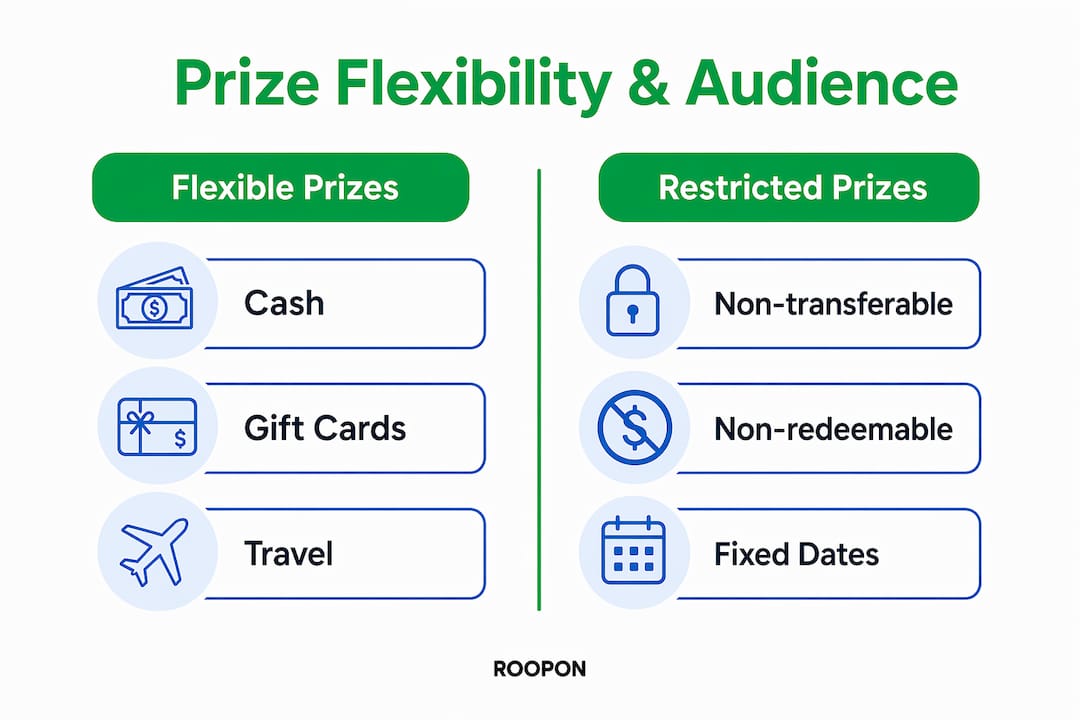
The table below compares prize flexibility against typical competition levels:
| Prize type | Flexibility | Typical competition level | Winning odds |
|---|---|---|---|
| Cash prizes | Very high | Extremely high | Low |
| Major gift cards (Woolworths, JB Hi-Fi) | High | High | Low to moderate |
| Travel packages (non-transferable) | Low | Moderate | Moderate |
| Niche tech accessories | Moderate | Low to moderate | Moderate to high |
| Hobby-specific prizes (fishing gear, craft kits) | Low | Low | High |
| Restricted experience prizes | Very low | Very low | Very high |
Non-transferable, non-redeemable prizes reduce perceived desirability for many entrants, which shrinks the entry pool. A travel prize that cannot be transferred to a family member, or an experience that requires specific scheduling, will deter a large portion of potential entrants. That is actually good news if you genuinely want the prize and can use it.
The most flexible, cash-like prizes attract intense competition. It is that simple. More people = worse odds. If you are serious about winning, look for prizes with usage restrictions that do not affect you personally, because those restrictions are filtering out your competition.
Pro Tip: Read the terms and conditions of any giveaway before entering. Restrictions on transferability, booking windows, or geographic eligibility often reduce the entry pool significantly, giving you better odds if you can meet the requirements.
How does audience targeting shape prize desirability?
Strategic prize selection focuses on alignment with brand goals, target audience, budget, legal compliance, and operational feasibility. From an entrant's perspective, this means that competitions run by brands with a clear niche will offer prizes that genuinely suit their audience, and those competitions tend to attract fewer random entrants.
Here is how audience targeting influences prize desirability and your entry strategy:
- Niche prizes filter out freebie hunters. A competition run by a cycling brand offering a Garmin Edge cycling computer will attract serious cyclists, not casual entrants. Niche-relevant prize categories improve the quality of entrants and reduce the number of people entering purely for resale value.
- Brand-aligned prizes signal a smaller, more engaged entry pool. When a brand like Patagonia runs a giveaway for outdoor gear, the entry pool is self-selecting. You are competing against people who actually use the product, not the general public.
- Generic prizes attract accidental entrants. Mapping who a prize attracts versus who it accidentally attracts is a recognised strategy in giveaway design. A $500 Visa gift card will attract anyone with a pulse. A $500 credit at a specialist photography store will attract photographers.
- Prize-audience fit improves your post-win experience. Winning a prize you actually want and can use is the point. Entering competitions where the prize aligns with your interests means you are competing in a smaller pool and walking away with something genuinely useful.
The practical takeaway is straightforward. Seek out competitions hosted by brands whose products or services you already use. The prize will be relevant, the entry pool will be smaller, and your odds will be meaningfully better than in a mass-market draw.
Practical tips for choosing the most desirable prize categories
Choosing which prize categories to focus your entries on is a genuine strategy, not just a matter of personal taste. Prize desirability depends on both attractiveness and the size of the competitive entry pool, which means you need to weigh both factors before committing your time to entering.
Use these criteria to assess whether a prize category is worth your effort:
- Assess personal utility first. A prize you cannot use or do not want is worth nothing to you, regardless of its retail value. A $2,000 fishing package is a terrible prize if you do not fish, even if the odds are excellent.
- Research the entry pool size. Competitions with broad appeal like cash draws or major electronics giveaways attract tens of thousands of FREE entries. Competitions with niche prizes attract hundreds. The maths matters.
- Look for desirable award options with usage restrictions you can meet. If a travel prize requires travel within six months and you can do that, enter it. Many entrants will skip it because of the restriction, reducing your competition.
- Diversify across prize categories. Do not put all FREE your entries into one type of competition. Spread your effort across a mix of niche prizes with good odds and moderate-appeal prizes with decent value.
- Avoid prizes with high resale value but no personal use. Cash-equivalent prizes like Visa gift cards or Apple products attract the largest entry pools because anyone can use or sell them. Unless you have a specific reason to enter, your odds in these draws are poor.
- Check Australian giveaway laws for eligibility requirements. Some competitions restrict FREE entries by state, age, or employment status. Confirming eligibility before entering saves wasted effort.
Pro Tip: Keep a simple spreadsheet tracking the competitions you enter, the prize category, estimated entry pool size, and draw date. Over time, you will see which categories deliver the best return on your effort.
Desirability is partly about utility overlap with daily life and how well a prize connects with your actual needs. The most attractive award types are not always the ones with the highest price tags. They are the ones that fit your life and attract a manageable number of competitors.
Key takeaways
A desirable prize category is defined by audience relevance and prize flexibility, not by retail value alone. Entrants who match prize categories to their own lifestyle and look for restricted prizes they can actually use will consistently find better odds than those chasing cash and electronics draws.
| Point | Details |
|---|---|
| Audience relevance drives desirability | Prizes aligned with a specific audience's lifestyle attract fewer, more qualified entrants. |
| Flexibility increases competition | Cash and major gift cards attract the largest entry pools and the worst odds. |
| Restrictions can work in your favour | Non-transferable or schedule-restricted prizes deter many entrants, improving your odds if you qualify. |
| Niche prizes beat generic prizes for odds | Hobby-specific or brand-aligned prizes consistently attract smaller, more targeted entry pools. |
| Personal utility is the baseline criterion | Never enter a competition for a prize you cannot use, regardless of its monetary value. |
Our take on prize desirability trends
At Roopon, we have watched thousands of Australians enter giveaways and make the same mistake repeatedly. They chase the biggest prize, not the smartest one. A $10,000 cash draw sounds exciting, but when 80,000 people enter, you are looking for a needle in a haystack.
The trend we find most interesting right now is the rise of experience-based and lifestyle prizes. Travel packages, dining experiences, and wellness retreats are growing in popularity among competition organisers because they attract genuinely interested entrants rather than prize flippers. For entrants, this is a real opportunity. These prizes often carry restrictions that thin out the competition considerably.
What most people overlook is that the criteria for prize selection should be personal, not just financial. We have seen members win prizes worth less than $500 that genuinely changed their week, because the prize fit their life perfectly. A $200 voucher for a restaurant you love beats a $1,000 prize you will never use.
The other misconception worth addressing is that all popular competition prizes are worth entering. Popularity and desirability are not the same thing. A prize can be widely coveted and still be a poor strategic choice because the entry pool is enormous. The smartest entrants we see are the ones who treat giveaways like a portfolio. They spread FREE entries across categories, prioritise prizes with restrictions they can meet, and stay consistent over time.
- Roopon Team
Find desirable prize draws worth entering on Roopon
Roopon is built for Australians who want better odds and genuine value from FREE their giveaway entries. Unlike mass-market draw platforms, Roopon offers members FREE included prize-draw entries per their plan and published campaign terms. Extra packages exist for specific campaigns. Current prizes: roopon.com/giveaways. The prize categories span cash, lifestyle rewards, and exclusive member benefits, so you are not competing against the entire country for a generic gift card.

Members also access exclusive discounts from over 16 partner stores, earn FREE bonus entries through referrals, and use the Payday Allocator to manage their budget while staying active in draws. If you are serious about improving your chances with cash prize draws and want prizes that actually fit your life, Roopon is worth a look. The entry pool is smaller, the prizes are real, and the odds reflect that.
FAQ
What is a desirable prize category in a giveaway?
A desirable prize category is a group of prizes that strongly aligns with a specific audience's preferences and daily life, making it more attractive to that group than a generic reward. Prize effectiveness comes from audience relevance, not universal appeal.
Do restricted prizes offer better winning odds?
Yes. Prizes that are non-transferable, non-redeemable for cash, or tied to specific scheduling requirements deter many entrants, which reduces the entry pool. Niche or restricted prizes consistently attract fewer competitors than flexible, cash-equivalent prizes.
Are cash prizes the best prize category to enter?
Cash prizes are the most broadly desirable award option but also attract the most competition, making them statistically poor choices for improving your odds. If winning is the goal, niche prizes with smaller entry pools offer a better return on your effort.
How do I choose which prize categories to focus on?
Prioritise prizes that match your lifestyle and include usage restrictions you can meet, as these filters reduce your competition. Desirability overlaps with daily utility, so the best prize is one you would genuinely use, not just the one with the highest retail value.
Why do niche prizes attract fewer entrants?
Niche-relevant prize categories filter out casual and freebie-focused entrants who have no genuine interest in the prize. A hobby-specific prize like specialist photography equipment or a craft supply bundle only attracts people who actually want it, which keeps the entry pool small and your odds meaningful.
Recommended
- How Australian Creators Make Money with Giveaways (Without Buying the Prize) | ROOPON
- Australian Giveaway Platforms Reviewed 2026: Which Ones Actually Pay Out? | ROOPON
- Best Online Competitions in Australia 2026: Win Cash, Prizes and More | ROOPON
- Cash Prizes vs Gift Cards vs Points: Why Cash Wins | ROOPON
