
TL;DR:
- Using a layered approach with cashback, real-time tracking, and financial overview apps can save Australians $600 to $900 annually. Matching specific apps to shopping habits improves adherence and boosts savings during both online and in-store shopping. Consistent use of two or three focused apps outweighs relying on all-in-one solutions or switching apps frequently.
A budget shopping app is a digital tool that helps you spend less by tracking prices, applying coupons, or returning cashback on purchases. The most effective strategy for Australians is not picking one app but layering three types: a cashback app like Rakuten, a grocery tracker like GroceryBudget or Ibotta, and a coupon tool like Capital One Shopping. A layered cashback strategy combining these three tools can deliver $600 to $900 in annual savings on typical monthly spending. That figure shows why a budget shopping apps comparison matters more than most shoppers realise.
1. What features should you prioritise when comparing budget shopping apps?
The right app depends on where and how you overspend. A real-time in-store tracker solves a different problem than a post-purchase cashback tool. Knowing the difference stops you from downloading five apps and using none of them.
Key features to assess:
- Real-time tracking vs post-purchase analysis. Apps like GroceryBudget show a running total as you add items to your trolley. General apps like YNAB record spending after the fact. If checkout shock is your problem, real-time wins.
- Store coverage. Flipp covers 800+ retailers for flyer browsing. GroceryChop compares prices across 100+ stores using 90-day price history. Wider coverage means more chances to find the lowest price.
- Cashback and coupon integration. Rakuten returns 3–4% cashback on online purchases. Capital One Shopping applies coupons automatically at checkout. Both work passively, which is why they suit busy shoppers.
- Ease of use. Offline item scanning, simple interfaces, and fast receipt uploads all affect whether you keep using an app. A feature you never use saves you nothing.
- Cost. GroceryBudget's free tier includes unlimited carts. Its premium plan costs $3.99 per month. Most cashback apps are free because they earn commission from retailers.
Pro Tip: Start with one free app that matches your biggest spending leak. Add a second app only after the first becomes a habit.
2. How do popular budget shopping apps compare on key metrics?
This is the core of any honest budget shopping apps comparison for Australian shoppers. Each app excels in a specific area. None does everything well.
| App | Best for | Cost | Platform |
|---|---|---|---|
| Rakuten | Online cashback | Free | iOS, Android, browser |
| Ibotta | Grocery cashback | Free | iOS, Android |
| Capital One Shopping | Coupon automation | Free | Browser extension |
| GroceryBudget | Real-time trolley tracking | Free / $3.99/month | iOS, Android |
| Flipp | Flyer browsing | Free | iOS, Android |
| GroceryChop | AI price optimisation | Not publicly listed | iOS, Android |
Rakuten suits online shoppers who want passive savings. You shop through the Rakuten portal and cashback lands in your account automatically. Ibotta works best for grocery runs, offering $10–$30 per month in savings on common supermarket items. Capital One Shopping sits in your browser and finds coupon codes at checkout without you searching for them.
GroceryBudget's real-time tracking is genuinely different from general financial apps. It lets you scan items offline and see your running total before you reach the register. That single feature prevents the most common budgeting failure: spending more than planned because you had no live feedback.
Flipp suits shoppers who plan meals around weekly specials. GroceryChop uses AI to optimise your shopping list across multiple stores, drawing on 90-day price history to find the cheapest option for each item. Split-trip and list optimisation features like those in GroceryChop can drive 10–20% grocery savings by comparing prices before you leave home.
Pro Tip: Pair Rakuten for online purchases with GroceryBudget for in-store trips. You cover both channels without any overlap or extra effort.
3. What are the benefits of a layered app strategy vs an all-in-one budget app?
General budgeting apps like YNAB and Monarch Money provide whole-life financial oversight. They track income, bills, and savings goals across every category. That breadth is useful. The problem is they treat groceries as one line item, with no item-level guidance on what you actually bought or whether you overpaid.
A layered approach fixes this by assigning each job to the right tool:
- Cashback app (Rakuten). Handles online retail automatically. No effort required after setup.
- Grocery tracker (GroceryBudget or Ibotta). Manages in-store spending in real time and flags where your grocery bill is growing.
- Financial overview app (YNAB or Monarch Money). Tracks your total budget across all categories at a monthly level.
"Successful budget shoppers use a layered stack: one app for automatic cashback, one for in-store spending control, one for monthly financial oversight. Forcing one app to do all three leads to abandonment." — Multi-app strategies for budget shopping success
Apps providing live running totals in-store reduce impulsive purchases by moving spending decisions from the checkout to the moment you add an item to your trolley. That shift in timing is what prevents checkout shock. You make the decision when you still have a choice, not after everything is already scanned.
Budgeting experts recommend using dedicated apps for specific functions rather than all-in-one solutions. The reason is adherence. A focused app with a clear purpose is easier to use consistently. Consistent use is what produces real savings over time.
4. Which budget shopping apps suit different Australian shopper profiles?
The best app for you depends on your shopping habits, not on which app has the most features. Matching the tool to the behaviour is what makes the difference.
Heavy online shoppers
- Rakuten for automatic cashback on clothing, electronics, and travel bookings
- Capital One Shopping for coupon codes applied at checkout without manual searching
- Combined, these two apps work passively and require almost no behaviour change
Grocery-focused shoppers
- GroceryBudget for real-time trolley tracking and offline scanning
- Ibotta for cashback on specific grocery products after purchase
- Groceries Tracker for receipt scanning and item-level spending breakdowns that show exactly where your grocery bill is growing
Flyer planners and deal hunters
- Flipp for browsing weekly catalogues from 800+ retailers before you shop
- GroceryChop for AI-powered list optimisation across multiple stores
Envelope budgeters
- GoodBudget uses a digital envelope system to allocate spending by category before the month begins
- Pairs well with any cashback app because it handles planning while cashback handles savings
| Shopper type | Primary app | Supporting app |
|---|---|---|
| Online shopper | Rakuten | Capital One Shopping |
| Grocery tracker | GroceryBudget | Ibotta |
| Flyer planner | Flipp | GroceryChop |
| Envelope budgeter | GoodBudget | Rakuten |
Identifying whether your overspending is systemic or tactical helps you choose the right tool. Systemic overspending needs a planning app like GoodBudget. Tactical overspending at the supermarket needs a real-time tracker. Most Australians have both problems, which is exactly why a layered cashback approach outperforms any single solution.
Pro Tip: Check the best budgeting apps in Australia before committing to a paid subscription. Free tiers on GroceryBudget and Ibotta cover most shoppers' needs.
Key takeaways
The most effective budget shopping strategy for Australians combines a cashback app, a real-time grocery tracker, and a monthly financial overview tool rather than relying on any single app.
| Point | Details |
|---|---|
| Layer three app types | Use cashback, real-time tracking, and financial overview apps together for best results. |
| Real-time tracking prevents checkout shock | Apps like GroceryBudget show a running trolley total before you reach the register. |
| Cashback works passively | Rakuten and Capital One Shopping save money without changing your shopping behaviour. |
| Match app to shopper profile | Online shoppers need different tools than grocery-focused or envelope-budget shoppers. |
| Consistency beats perfection | The best app is the one you actually use every week, not the one with the most features. |
Roopon's take: why most Australians are leaving savings on the table
The biggest mistake we see is treating a budget shopping app comparison as a one-time decision. You download one app, use it for a fortnight, and then forget about it when life gets busy. That pattern is the real reason most people feel like apps "don't work."
What actually works is a small, consistent habit. Pick two apps, not five. Use one for online purchases and one for the supermarket. Check them every time you shop, not just when you remember. After a month, the savings accumulate without any extra effort.
The one-app-fits-all mindset is the other common trap. YNAB is excellent for monthly financial planning. It is not designed to stop you overspending on Tuesday's grocery run. GroceryBudget is excellent for that specific job. Using each tool for its intended purpose is what produces real results.
AI-driven price optimisation, as seen in GroceryChop, is worth watching. The shift from browsing flyers to having an algorithm compare prices across 100+ stores before you leave home is a genuine change in how Australians can approach weekly shopping. It moves spending control earlier in the process, which is exactly where it needs to be.
— Roopon Team
Save even more with Roopon's exclusive member discounts
Budget apps are one part of the savings picture. Roopon adds another layer that apps cannot replicate: exclusive member discounts across more than 16 partner stores, plus FREE included prize-draw entries per your plan and published campaign terms. Extra packages exist for specific campaigns. See weekly cash prize draws for current campaigns.
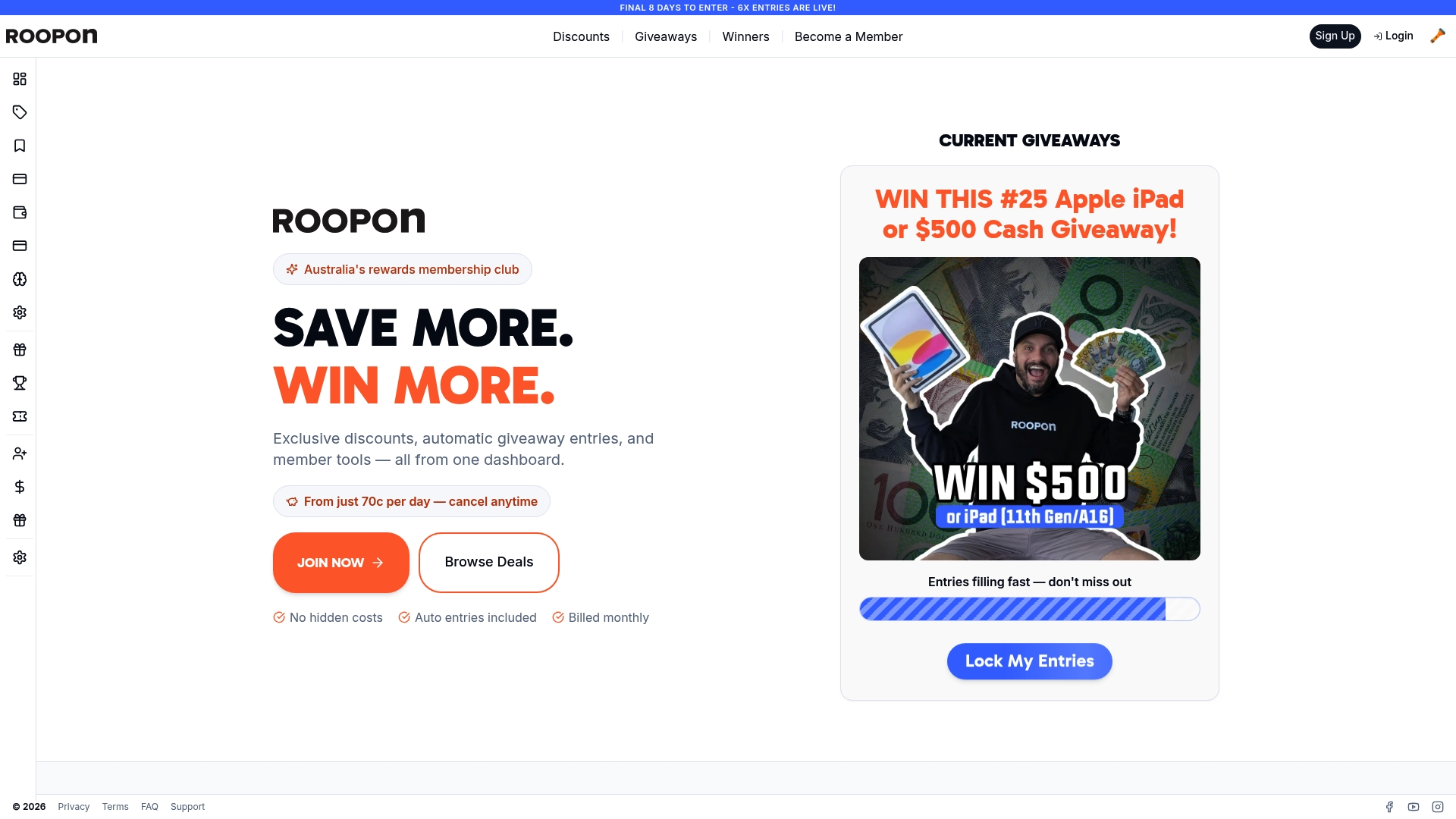
Roopon members access "mates rates" on everyday purchases, earn FREE bonus entries through referrals, and use the Payday Allocator to plan spending before it happens. Students can explore student discounts in Australia, while teachers and seniors have their own dedicated savings programmes. FREE Prize-draw entries follow the plan and that campaign’s terms. This page does not state odds. Pair Roopon with your app stack and you cover discounts, cashback, and real-time tracking in one approach.
FAQ
What is the best budget shopping app for Australians?
No single app is best for every shopper. A combination of Rakuten for online cashback, GroceryBudget for in-store tracking, and Capital One Shopping for coupon automation covers most spending scenarios effectively.
How much can I save using budget shopping apps?
A layered strategy combining Rakuten, Ibotta, and Capital One Shopping can deliver $600 to $900 in annual savings based on typical monthly spending patterns.
Do budget tracker apps work offline?
GroceryBudget supports offline item scanning, which makes it practical for supermarket trips with poor mobile coverage. Most cashback apps require an internet connection to verify purchases.
What is the difference between a cashback app and a budget tracker app?
A cashback app like Rakuten returns a percentage of your purchase price after you buy. A budget tracker app like GroceryBudget monitors your spending in real time as you shop, helping you stay within a set limit before you reach the checkout.
Is it worth using more than one budget shopping app?
Yes. Combining specialised apps for different functions increases both savings and adherence. One app for cashback and one for in-store tracking covers the two biggest sources of everyday overspending without creating app fatigue.
